
Photojournalist survives drone attack in Lebanon
Zeinab Faraj and Amal Khalil were struck while documenting the ceasefire in al-Tiri on April 22.
By Charlotte Morgan ·
Zeinab Faraj, a 21-year-old photojournalist from Bint Jbeil, survived a missile and drone attack in southern Lebanon on April 22. She was traveling with 42-year-old reporter Amal Khalil to document the aftermath of a month of airstrikes. The two women had collaborated on previous assignments after Khalil discovered Faraj’s work on social media.
The group reached the village of al-Tiri in the afternoon. Ahead of their vehicle was a car carrying Ali Nabil Bazzi, a 27-year-old municipal official, and Mohammed Hourani, a 37-year-old friend of the mayor. Bazzi was scheduled to sign a marriage contract that evening but joined the trip after meeting the women at Tebnine governmental hospital. Faraj heard Khalil scream and then saw the leading car engulfed in flames.
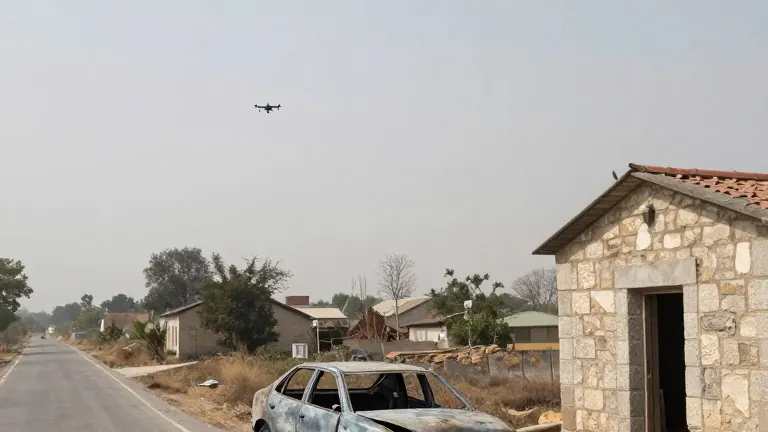
Drones appeared shortly after the first explosion. Faraj described the sound of the aircraft as terrifying as they flew close to her face. She and Khalil called emergency services, who assured them help was on the way. A paramedic advised them to drive back up the road because ambulances were blocked. As the women attempted to re-enter their vehicle, a second missile struck it.
The impact threw both women backward. Khalil wrapped her arms around Faraj, hoping the drone would think they were dead. They took shelter in a nearby house, where Khalil sustained visible injuries to her face, hand, and leg. Faraj sent a final message to her sister: “There’s no hope left. Forgive me.” She then crawled to a position where she could watch the road while Khalil remained unable to move.
Another drone descended toward Faraj inside the house. A missile followed, creating a sound Faraj described as unlike anything she had heard before. She lost consciousness and woke up trapped under rubble. A paramedic reached her and held her shoulders until a second worker cleared the debris. They pulled her free just as a stun grenade was dropped from a drone.
Faraj was transported to a hospital where nurses initially reassured her about Khalil’s condition before falling silent. Khalil died approximately one hour after paramedics were allowed to return to the scene. The Israeli military stated the attack targeted saboteurs violating the ceasefire. Human rights groups labeled the incident a war crime. An Israeli military spokesperson had previously called Khalil “terrorist media” in a video shared a week prior to the attack.
Faraj is now preparing to return to university to finish her radio and television degree. She walks with a limp and has visible injuries to one hand and her face. One of her eyebrows has limited movement due to trauma. She experiences night terrors and remains sensitive to the sound of aircraft. She continues to see an image of Hourani lying on the ground with his eyes open after the first strike.
Source: The Guardian