Climate Gap: Why Every Fraction of a Degree Now Determines Global Outcomes
UN data shows the 1.5-degree limit is out of reach, with projections now pointing to 2.8 degrees by century's end.
By Charlotte Morgan ·
The central conflict at this week's climate summit in Turkey is a mathematical reality: the global temperature limit agreed upon a decade ago is no longer attainable. Nations met at the COP31 summit to discuss a target they can no longer hit. Global average temperatures are already close to 1.5 degrees Celsius warmer than pre-industrial levels, and heat-trapping emissions from fossil fuels continue to rise.
The shift in expectations arrived gradually. In 2015, countries pledged to limit warming to 1.5 degrees Celsius. By 2025, that goal became unachievable as most nations failed to meet their emission-cutting pledges. A recent United Nations study now identifies 1.7 or 1.8 degrees Celsius as the best-case scenario for the planet. If current emission paths persist, the world will be approximately 2.8 degrees Celsius hotter by the end of the century.
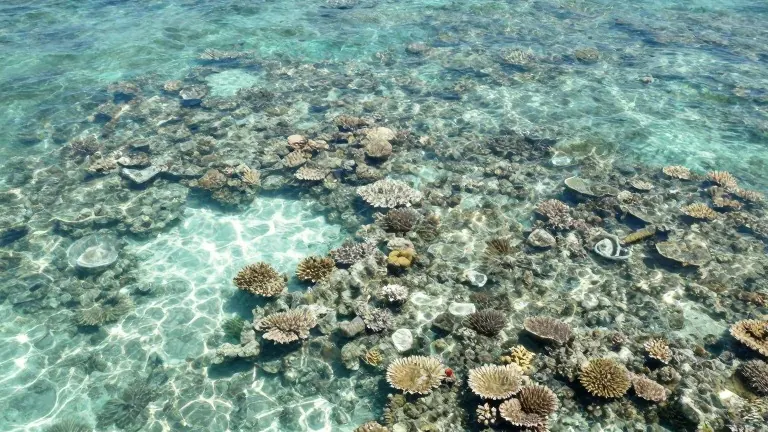
Scientists warn that the difference between 1.5 and 2 degrees Celsius is not a minor statistical variation but a threshold for ecological collapse. Tim Lenton, a climate professor at the University of Exeter, states that every fraction of a degree avoided limits harm significantly. The most visible indicator of this shift is the condition of the world's coral reefs.
Corals are highly sensitive to heat, and prolonged marine heat waves cause them to bleach and die. Researchers found that 44% of coral species are already at risk of extinction. With a strong El Niño pattern currently raising water temperatures, a fifth global bleaching event is likely unfolding. David Obura, director of the coral research organization CORDIO East Africa, notes that time is critical for these ecosystems to survive.
The Intergovernmental Panel on Climate Change determined that beyond 2 degrees Celsius of warming, 99% of corals would be lost. Obura explains that at that level, most corals would not survive in functional ways needed to build reef ecosystems. Species might remain but would be so rare or compromised that they would effectively be extinct. Conservation groups are responding by restoring corals and breeding heat-tolerant varieties to help reefs withstand the coming heat.
Human populations face similar thresholds. For every tenth of a degree of warming, an additional 140 million people are exposed to dangerous heat levels. Europe recently estimated that 50,000 people died from heat-related causes this past summer. Lenton compares this to a physiological tipping point where the human body fails. Warmer air also holds 7% more water vapor per degree, leading to heavier downpours and more intense storms across regions like the United States.
At the ongoing negotiations in Turkey, delegates are not expected to make major new commitments to cut emissions. Instead, discussions are focusing on a new electrification goal to replace fossil fuels with cleaner sources for cars and homes. This approach aims to reduce overall emissions as the global electricity grid incorporates more solar and wind power.